Is snoring affecting your relationship? What couples should know
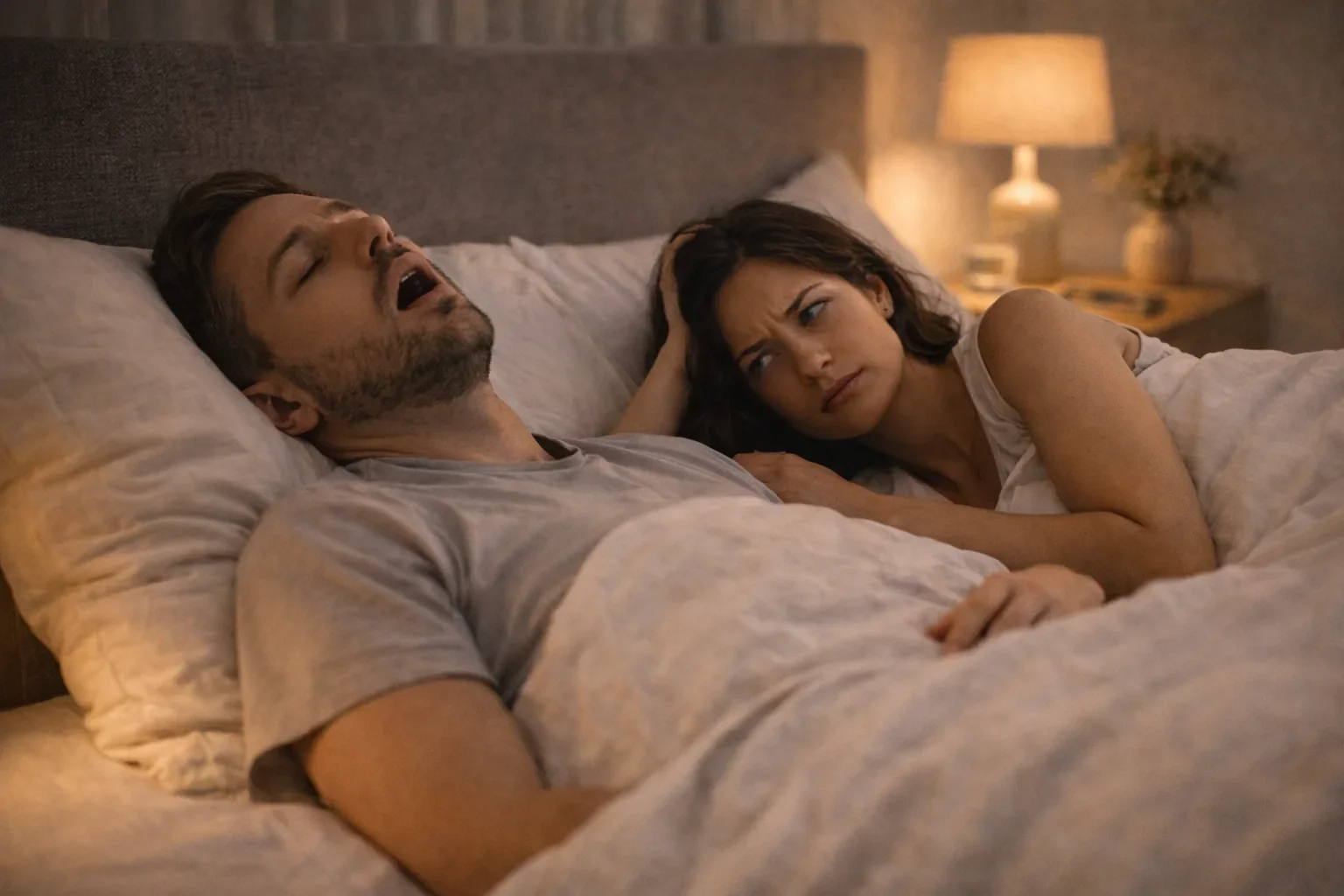
Snoring is, by its nature, a condition that affects two people, yet it is often treated as if it affects only one. While the snorer is often unaware of the sounds they produce during sleep, their partner bears much of the burden: disturbed nights, interrupted sleep, the gradual accumulation of tiredness.
The scale of the problem
One in five UK couples now sleep in separate rooms, and snoring is the leading reason, cited by over a third of those who sleep apart.
A YouGov survey commissioned by the National Bed Federation in 2020 found that approximately one in five UK couples now sleep in separate rooms; a figure that has roughly doubled since 2009, when fewer than one in ten couples reported doing so. Snoring was by far the most commonly cited reason, reported by 37% of men and 36% of women sleeping apart.
Research commissioned by healthcare company 32Co found that 47% of recently divorced Britons cited snoring or sleep disorders as contributing to the breakdown of their relationship. Of couples who had adopted separate sleeping arrangements, 85% believed this had directly contributed to their eventual separation.
Taken together, these findings suggest that snoring is a more significant driver of relationship difficulty and breakdown in the United Kingdom than is generally recognised, and that it remains substantially undertreated.
Snoring is not a personal failing. It is a medical condition with identifiable causes and, in most cases, effective treatment. Treating it as anything else delays the help that both partners need.
The impact on both partners
For the non-snoring partner, the consequences of disrupted sleep are well documented. Chronic sleep deprivation, even at a moderate level, affects mood, cognitive function, physical health and emotional resilience. The cumulative effect of repeated nights of broken sleep is not trivial: it increases irritability, impairs decision-making, and over time can contribute to anxiety and low mood in a way that has nothing to do with the relationship itself.
For the snorer, awareness of the problem often brings its own burden: guilt, embarrassment, and sometimes a reluctance to seek help that compounds the situation for both. Some snorers minimise the problem because they cannot hear it themselves; others are aware of it but feel helpless, particularly if previous attempts to change sleeping position or reduce alcohol intake have made little difference. Both responses are understandable, and neither represents a lack of care for the partner affected.
The "sleep divorce": a short-term solution, long-term risk
When couples begin sleeping in separate rooms, the solution provides short-term relief for the sleep-deprived partner, but frequently has broader consequences for the relationship. Intimacy, connection and routine are all affected. It is a practical adaptation that can quietly become a permanent arrangement unless the underlying cause is addressed.
The separate bedroom is not a solution to snoring. It is a symptom of an unresolved medical problem. And the evidence suggests that couples who address the snoring directly are considerably better placed than those who adapt around it indefinitely.
When snoring may indicate something more serious
Snoring is not always simply a noise problem. In some cases it is a sign of obstructive sleep apnoea: a condition in which the airway repeatedly collapses during sleep, causing the snorer to stop breathing momentarily before waking briefly to restore airflow.
The partner of someone with undiagnosed sleep apnoea is often in the best position to recognise the signs: snoring punctuated by silence, followed by a gasp or snort; restless sleep; apparent struggles to breathe. Sleep apnoea carries significant health consequences beyond the bedroom, including elevated cardiovascular risk, impaired glucose regulation and increased accident risk. Identifying and treating it is important not only for the relationship but for the snorer's long-term health.
Having the conversation
Raising the subject when both partners are rested and not immediately after a difficult night reduces the risk of the conversation becoming emotionally charged. Framing the concern around health, rather than inconvenience, shifts the focus from blame to shared interest. Acknowledging that snoring is a medical issue with effective treatment options, rather than a personal failing, removes much of the shame that can prevent people from seeking help.
It can also be useful to approach the conversation as something you are doing together rather than something one partner is raising against the other. Attending a consultation as a couple, for example, means that both partners hear the clinical explanation at the same time and can ask questions together. Partners who have observed the snorer during sleep are often the most valuable source of clinical information, particularly where sleep apnoea is a possibility.
What can be done?
Snoring is one of the most treatable conditions in ENT medicine, and understanding why snoring happens is the first step towards choosing the right treatment. Assessment begins with understanding the cause, as snoring arising from nasal obstruction requires a different approach to snoring driven by soft palate collapse or tongue base issues. Treatment options range from lifestyle measures through to targeted procedures, and in the majority of cases, a clear and effective pathway can be identified following a thorough clinical assessment.
Lifestyle measures, including weight loss, reducing alcohol intake, improving sleep position and treating nasal congestion, can produce meaningful improvement for many patients. Where structural anatomy is the primary contributor, minimally invasive procedures such as coblation turbinate reduction or radio frequency soft palate treatment may be recommended. For patients in whom sleep apnoea has been identified, CPAP therapy or surgical intervention may also form part of the plan.
The most important step is the first one: seeking an assessment rather than continuing to adapt around a condition that has effective treatment. For many couples, addressing snoring is one of the most significant improvements they make to their shared quality of life. Our team at Hillser Clinic is experienced in assessing and treating snoring in a clinical, supportive environment. You can find further information about our approach on the snoring and sleep wellness page.
Frequently asked questions: snoring and relationships
Should I encourage my partner to see a doctor about their snoring?
Yes, and framing it as a health concern rather than a complaint is the most effective approach. Snoring can be a sign of obstructive sleep apnoea, which carries real long-term health risks, and your partner's overall health is a legitimate reason to raise the subject. Attending the consultation together, if your partner is willing, means both of you can hear the clinical explanation and ask questions at the same time.
Is snoring always a sign of sleep apnoea?
Not always. Many people snore without having obstructive sleep apnoea, and for them snoring is a mechanical issue rather than a sign of a more serious condition. However, the two often coexist, and the most reliable way to distinguish between them is a clinical assessment including a sleep study. If your partner has been witnessed to pause in their breathing during sleep, or gasps or chokes on waking, assessment is particularly important.
Can separate bedrooms really damage a relationship?
Research suggests that for a significant proportion of couples, sleeping apart has broader consequences beyond simply solving the sleep problem. Intimacy, physical closeness and daily routine are all affected, and what begins as a practical solution can quietly become a permanent arrangement. Addressing the underlying cause of the snoring is consistently associated with better outcomes for the relationship than indefinite adaptation around it.
Will treating snoring actually help our relationship?
For most couples, yes. When snoring is treated effectively, both partners benefit: the non-snoring partner regains uninterrupted sleep, and the snorer is relieved of the guilt and frustration that often accompanies awareness of the problem. Many couples report that the improvement in their shared sleep quality has a significant positive effect on their relationship, energy levels and general wellbeing.
How do I find out whether my snoring can be treated?
A specialist ENT assessment is the right starting point. The assessment will identify the cause of the snoring, whether structural, functional or related to sleep apnoea, and allow a clear treatment plan to be put in place. Most causes of snoring are identifiable and treatable, and the majority of patients who seek assessment find that there is an effective option available to them.
“For many couples, the conversation about snoring is one of the most important health conversations they will have. And the outcome, when snoring is properly treated, can be transformative for both partners.”
Book a consultation at Hillser Clinic
If snoring is affecting your sleep, your partner's sleep, or your relationship, specialist assessment is the right next step. We offer expert evaluation of snoring and sleep-disordered breathing at Hillser Clinic, with a clear diagnostic process and a full range of treatment options tailored to your anatomy and circumstances. To arrange a consultation, please contact our team.